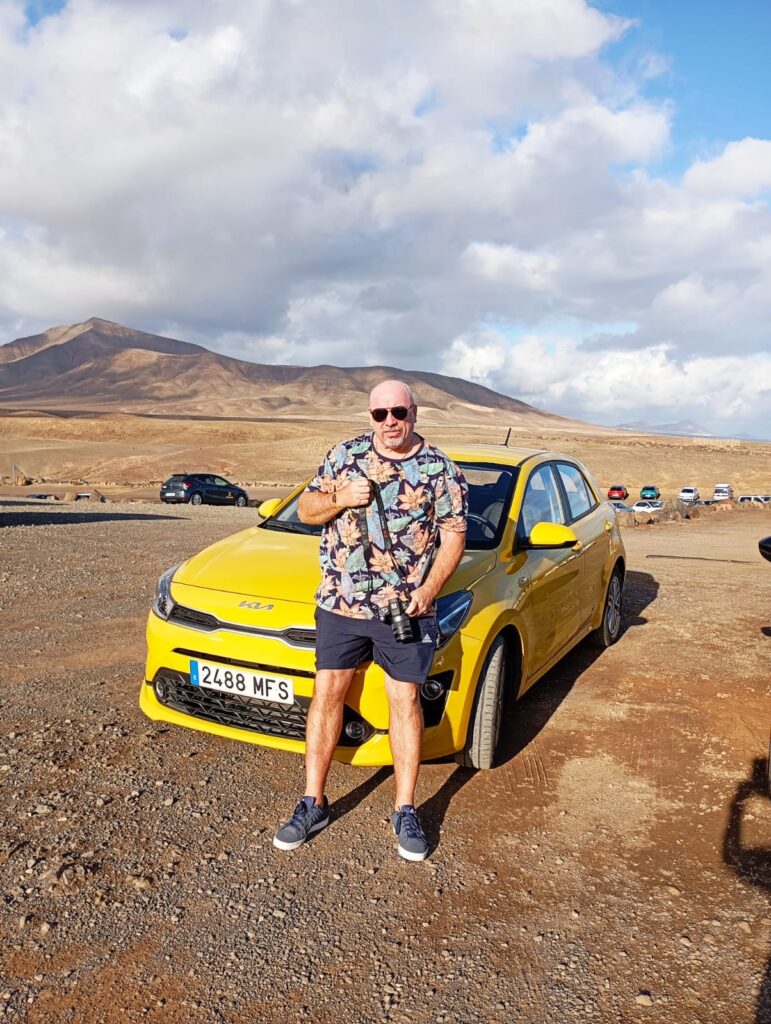
Seven days is the sweet spot on Lanzarote. It is long enough to explore the volcanic interior, work through the best beaches, visit César Manrique’s remarkable creations and still leave time to eat well, slow down and absorb what makes this island genuinely extraordinary. Go shorter and you are rushing. Go longer and you are repeating yourself — though few people complain about that.
This itinerary is designed for first-time visitors who have hired a car, which is the only sensible way to see the island properly. It balances the unmissable with the unexpected, mixes active days with slower ones, and covers all four corners of the island. If you want the full picture of everything Lanzarote offers before you dive into the day-by-day plan, our comprehensive Lanzarote travel guide is the place to start.
A few practical notes before we begin: this itinerary assumes you are based in Puerto del Carmen or Playa Blanca, the two most popular resort choices. Where your base changes the logic of a particular day, we have noted it. Pick up your hire car at the airport on arrival — you will need it from day one.
Lanzarote Itinerary 7 Days
Check Prices & Availability of Lanzarote Hotels
Table of Contents
Day 1: Arrival, Puerto del Carmen and Getting Your Bearings
Morning/Afternoon — Settle In and Hit the Beach
Arriving on Lanzarote for the first time, resist the urge to immediately plan a packed day of sightseeing. Day one is for orientation. Check in, get to grips with the island’s scale (it is smaller than you think), and spend the afternoon on Playa Grande in Puerto del Carmen. It is wide, sheltered and well-serviced — exactly what you need after a flight.
The beach runs the length of the resort’s main promenade and offers calm, clear water. Grab a sun lounger, get your bearings, and remind yourself that the whole island is roughly 60 km long by 25 km wide. Everything is within reach.
Evening — Old Town Harbour and First Dinner
Skip the main strip for your first dinner. Walk or drive down to Puerto del Carmen’s old town harbour, a short distance south of the main resort area. The restaurants here have a noticeably more local character than those lining Avenida de las Playas, and the prices reflect it. Order papas arrugadas with both mojos — the wrinkled salted potatoes with red and green sauces are the definitive Canarian dish, and there is no better introduction to the local cuisine. Fresh fish is the other obvious choice; ask what came in that day.
Practical tip: Pick up a road map or download an offline map of the island tonight. Mobile signal can drop in some volcanic and inland areas.
Day 2: Timanfaya National Park and the Western Coast
Morning — Fire Mountains
Day two is the one most visitors have been waiting for. Timanfaya National Park sits in the southwest of the island and is unlike anywhere else in Europe. The eruptions of the 1730s buried a quarter of Lanzarote under lava, and the landscape here still looks freshly formed: deep red, rust and black hills with barely a plant in sight across the entire horizon.
Arrive early — the park gets busy by mid-morning, especially in peak season. The main experience is the guided bus tour through the volcanic terrain, which takes around 30 minutes and winds through the most dramatic parts of the landscape. At the Islote de Hilario visitor centre, staff demonstrate the intense geothermal heat just below the surface by pouring water into a borehole and watching it erupt instantly as steam. It is theatrical and memorable.
Note that you cannot walk freely inside the national park boundary — the bus tour is the only access to the core zone. For walking, head to Caldera Blanca (see below).
Afternoon — Caldera Blanca Hike
Just outside the national park boundary, Caldera Blanca is Lanzarote’s finest free hiking experience. The circular route takes around two to three hours at an easy pace and brings you to the rim of a large volcanic crater with sweeping views across the lava fields. The path cuts through otherworldly terrain — black lava underfoot, the silence of a landscape that feels like the surface of another planet.
Wear sturdy shoes. The volcanic rock is razor-sharp and uneven, and walking it in sandals is not a good idea. Bring water and sun protection; there is no shade on this route.
Evening — El Golfo
Finish the day at El Golfo, a small fishing village on the western coast. The main draw is Charco de los Clicos, a vivid emerald-green lagoon formed in a partially collapsed volcanic crater, separated from the Atlantic by a black sand beach. It is one of the most photographed spots on the island, and for good reason. Restaurants line the waterfront here and serve some of the freshest fish you will find anywhere on Lanzarote. The setting — lava cliffs, green water, Atlantic beyond — is extraordinary at sunset.
Day 3: César Manrique’s Lanzarote — Fundación, Jameos del Agua and Cueva de los Verdes
Morning — Fundación César Manrique
César Manrique is inseparable from Lanzarote. The artist, architect and conservationist spent decades shaping the island’s identity, campaigning against the high-rise development that blighted other Spanish resort islands and creating a series of remarkable art-and-nature installations that remain the island’s most distinctive attractions. His influence earned Lanzarote its status as a UNESCO Biosphere Reserve, recognised in 1993.
Start at the Fundación César Manrique near Tahíche. This is Manrique’s former home, built across five volcanic bubbles formed during an 18th-century eruption. The house is extraordinary: rooms flow through the lava tunnels, and the design blurs the line between architecture and landscape entirely. It is the best single introduction to his vision and sets the tone for everything else you will see today. Allow 90 minutes.
Afternoon — Jameos del Agua and Cueva de los Verdes
Both of these sites sit on the northern coast and are best visited together on the same afternoon. They are part of the same volcanic tube system — a six-kilometre lava tunnel created by the eruption of Volcán de la Corona — reimagined by Manrique for public experience.
Jameos del Agua is the more theatrical of the two. A volcanic cave has been transformed into a concert hall, restaurant, pool and underground lake. That lake is home to a tiny albino blind crab — Munidopsis polymorpha — found nowhere else on earth. The crab evolved in total darkness over thousands of years and is now effectively the island’s most famous resident. The cave setting, the blue-lit water, the otherworldly quiet of it — it is one of the genuinely unmissable experiences on the island.
Cueva de los Verdes, a short drive away, is one of the longest accessible volcanic tunnels in the world. Guided tours take you through dramatically lit lava passages for around an hour. There is a surprise at the end of the tour that is worth not spoiling here — just know that it is worth staying until the guide delivers it.
Evening — Arrieta for Dinner
The small coastal village of Arrieta is a short drive from both sites and makes a perfect evening stop. It is relaxed, unpretentious and popular with locals. The beachside restaurants here serve good fish at honest prices, and the harbour atmosphere is a world away from resort dining.
Day 4: The North — Mirador del Río, Haría and the Valley of a Thousand Palms
Morning — Mirador del Río
Drive to the northern tip of the island for one of Lanzarote’s most dramatic viewpoints. Mirador del Río sits on the edge of cliffs high above the Chinijo Archipelago, looking out across the narrow strait to La Graciosa, the small island below. Manrique designed the viewing platform to blend seamlessly into the cliff face — from outside it is almost invisible. From inside, the panoramic windows frame one of the finest views in the Canaries. There is a small entrance fee and a café.
From here you can see La Graciosa clearly. If you have not already planned your ferry day (Day 6 in this itinerary), this view will confirm that you need to go.
Afternoon — Haría and the César Manrique House Museum
Drop down from the cliffs into the valley of Haría. This is the greenest part of Lanzarote, sheltered from the wind and filled with thousands of palm trees that give it an almost North African atmosphere. The village itself is small, quiet and whitewashed, with a Saturday craft market if your timing aligns.
The César Manrique House Museum here was the artist’s final home before his death in 1992. The house and gardens reflect his personal vision rather than the public spectacle of Jameos del Agua — it feels more intimate, more revealing of the man behind the landmarks. Worth an hour of your time.
Evening — Teguise for a Wander
If this day falls before a Sunday, position yourself for the next morning’s market in Teguise (see Day 5). The town itself — the old capital of Lanzarote — is beautiful in the early evening when day-trippers have left. The cobbled streets, old church and shaded squares reward a quiet stroll. There are a handful of decent restaurants here for dinner.
Day 5: Teguise Sunday Market, La Geria Wine Country and Yaiza
Morning — Teguise Sunday Market
If at all possible, arrange your itinerary so that Day 5 falls on a Sunday. The Teguise market is the biggest and most atmospheric on the island, filling the old capital’s streets with craft stalls, food vendors, live music and a genuine cross-section of island life. Arrive early — by 10am the crowds build quickly. Buy local cheese, mojo sauces, almond sweets and handmade crafts. It runs until around 2pm.
If Day 5 does not fall on a Sunday, Teguise is still worth visiting for its architecture and quiet charm — simply swap to the market on whichever Sunday does fall within your week.
Afternoon — La Geria Wine Region
La Geria is one of the most visually striking agricultural landscapes you will encounter anywhere. The wine region occupies the volcanic interior between Teguise and Yaiza, and the sight of it stops people in their tracks: individual vines planted in shallow circular pits dug into black volcanic ash, each protected by a low semicircular stone wall. The black landscape dotted with green is vivid and totally unlike any vineyard elsewhere.
The region produces mainly Malvasía, a crisp, aromatic white wine that is the natural partner to local seafood. Several bodegas are set up for informal drop-in tastings, and prices are very reasonable. Bodega La Geria and Bodega El Grifo are both well set up for visitors. El Grifo also has a small wine museum on site if you want context for what you are tasting.
Allow two to three hours to drive slowly through the region, stop at a bodega or two and take in the landscape properly. This is not a place to rush.
Evening — Yaiza Village
Finish the afternoon in Yaiza, consistently voted one of the most beautiful villages in Spain. It is compact, immaculately whitewashed and sits on the edge of the lava fields with Timanfaya visible in the distance. The village has an unhurried, residential quality that distinguishes it from the resorts. Casa Bermeja is a well-regarded restaurant here if you want to make an evening of it, or pick up provisions and eat somewhere more informal.
Day 6: La Graciosa Day Trip
Morning — Ferry from Órzola
La Graciosa is the small island visible from Mirador del Río, sitting just off Lanzarote’s northern tip across a narrow channel called El Río. With a permanent population of around 700 people, no tarmac roads and no mass tourism infrastructure, it offers something increasingly rare: genuine quiet.
Ferries run from Órzola, a small fishing village on Lanzarote’s northern tip, several times daily. The crossing takes around 25 minutes. Book in advance during peak season as spaces fill up. Líneas Romero operates the route and is the main ferry operator.
Arrive in Caleta del Sebo, the island’s only proper settlement, and immediately feel the shift in pace. There are a handful of restaurants, a few small shops and very little else. Hire a bicycle in the village — this is the best way to explore the island, and most of the rental operations are very informal and very affordable.
Afternoon — Beaches and Cycling
La Graciosa has some of the best beaches in the Canaries, and because access requires a ferry crossing and the island has no mass-market resort development, they are never overwhelmed. Playa de las Conchas on the north coast is the showpiece — a wide arc of pale sand facing the Atlantic with the volcanic bulk of Montaña Clara rising behind it. The water here can be rough; swimming conditions depend on wind direction. Playa Francesa on the southern coast is calmer and easier for swimming.
Cycling between the beaches takes you across sandy tracks through low volcanic terrain. There are no hills to speak of and no traffic beyond a handful of 4×4 vehicles. It is an entirely different version of Lanzarote from the one on the main island — slower, more elemental and deeply peaceful.
Evening — Return Ferry and a Simple Dinner
Take one of the late afternoon ferries back to Órzola and drive south. After a day on La Graciosa, the idea of a restaurant with a menu and a waiter will feel like luxury. Puerto del Carmen or wherever you are based has plenty of options. Keep this evening simple — you have a final full day tomorrow and a long walk planned.
Day 7: Papagayo Beaches, Playa Blanca and a Final Sunset
Morning — Papagayo
Save the best beach day for last. The Papagayo beaches occupy a protected stretch of the southern coast near Playa Blanca and are the finest on the island by some distance. A series of small coves cut into golden cliffs, each facing a different direction, each with its own character — Playa Papagayo is the main and most photogenic, Playa de la Cera is slightly quieter, Playa Mujeres and Puerto Muelas are more secluded still.
There is a small vehicle entry charge to access the coastal road into the Monumento Natural de Los Ajaches, the protected area that contains the beaches. It is worth every cent. Park at one of the designated areas and either walk between the coves or move the car between sessions. The water here is clear, calm and the kind of blue that photographs almost too perfectly to look real.
Go early. By 11am in summer the most popular coves fill up. Weekdays are noticeably quieter than weekends, when visitors from across the island make the drive south.
Afternoon — Playa Blanca and the Promenade
From Papagayo, drive or walk into Playa Blanca itself. This is Lanzarote’s most upmarket resort, quieter and more sedate than Puerto del Carmen, with a long promenade connecting the marina to the main beaches. Playa Blanca beach in the centre of the resort is wide and sheltered. The marina area has a good selection of restaurants and is well suited to a long, unhurried lunch.
If you are based in Playa Blanca this week, you will already know this stretch well. If you have been further north, treat this final afternoon as an introduction to the southern resort and decide whether a return trip is warranted.
Evening — Sunset from Punta del Papagayo or the Marina
For the final evening, two options present themselves. The cliffs at Punta del Papagayo — the southernmost point of the Papagayo headland — face southwest and offer an unobstructed view of the sun dropping into the Atlantic. If the weather has been clear all week, this is the place to mark the end of it. Take something to drink, find a spot on the rocks and watch the sky turn.
Alternatively, the marina in Playa Blanca has a cluster of good restaurants with terrace seating and a pleasant early-evening atmosphere. Dinner here, a final glass of Malvasía, and the kind of quiet satisfaction that comes from a week well spent on an island that rewards close attention.
Practical Tips for Your Lanzarote Week
Getting Around A hire car is essential. The public bus network (guaguas) connects the main towns but runs infrequently and will not get you to Timanfaya, Papagayo or Caldera Blanca without significant difficulty. Hire from the airport on arrival. Fuel is cheaper than mainland Spain. Parking is generally free and easy outside the main resort promenades.
Best Time to Visit Lanzarote’s climate is exceptional year-round. Summer (June–September) is hot, busy and at its most expensive. Spring and autumn offer the best balance of warm weather and manageable crowds. Winter is mild — typically 18–20°C — and very quiet, particularly appealing for walkers and those after a peaceful break.
What to Budget Mid-range daily budget (excluding accommodation) runs to around €60–80 per person covering hire car share, entry fees, meals and drinks. Timanfaya, Jameos del Agua, Cueva de los Verdes and Fundación César Manrique all carry entrance fees; a combined ticket is available for some attractions.
Language Spanish is the official language. English is widely spoken in the tourist areas and resorts. A few words of Spanish — particularly outside the main tourist zones — are always appreciated.
Packing Essentials High-factor sun cream (the volcanic landscape reflects UV intensely), sturdy walking shoes for volcanic trails, a light layer for evenings which can be cooler than expected, and reusable water bottles. Tap water is safe but heavily desalinated; many visitors prefer bottled.
Frequently Asked Questions
Is 7 days enough time to see Lanzarote?
Yes — seven days is an ideal amount of time for Lanzarote. The island is compact enough that you can cover all the main highlights without feeling rushed, while still having space to slow down, revisit a favourite beach or linger over a long lunch. Many visitors find that a week gives them a thorough experience of the island without anything feeling squeezed. If you want to dig deeper into specific areas — extensive hiking, multiple visits to La Graciosa, or serious wine touring in La Geria — then ten days would give extra breathing room.
Do I need a hire car for a 7-day Lanzarote itinerary?
For this itinerary, yes. A hire car transforms what is possible on the island. Timanfaya National Park, Caldera Blanca, Papagayo beaches, La Geria and the northern viewpoints are all either inaccessible or very inconvenient without your own transport. The public bus network serves the main resorts and some inland towns, but it is too limited and infrequent to support a full week of varied sightseeing. Hiring a small car at the airport is affordable, parking is generally easy and roads across the island are well maintained and clearly signed.
What is the best base for a week in Lanzarote?
Puerto del Carmen is the most popular choice and the most practical for this itinerary — it sits centrally on the east coast, which puts Timanfaya, the north and the south within roughly equal driving distances. Playa Blanca in the south suits those who prioritise beach time and a quieter atmosphere, and places you very close to Papagayo. Costa Teguise on the northeast coast is a quieter alternative to Puerto del Carmen with good access to the northern Manrique sites. Avoid basing yourself in Arrecife unless you specifically want a city experience rather than a resort one.
When is the best time to visit Lanzarote for a week?
March to May and September to November are the sweet spots. Temperatures are warm and comfortable, the main beaches are enjoyable, and the island is noticeably less crowded than in peak summer. July and August are the busiest and hottest months, with long queues at popular sites like Timanfaya and crowded beaches. December to February is mild, peaceful and inexpensive, but occasional wind and rain are more likely — still very good for walking and sightseeing, less reliable for consistent beach days.
Can I visit La Graciosa as a day trip from Lanzarote?
Absolutely, and it is highly recommended. The ferry from Órzola takes around 25 minutes and runs multiple times daily. A day trip gives you enough time to hire bicycles, visit the main beaches and have lunch in Caleta del Sebo before catching an afternoon ferry back. Book your return crossing in advance during July and August when the ferries fill up quickly. La Graciosa has no tarmac roads and very limited facilities, which is precisely its appeal — it is a complete contrast to the main island and a highlight of most visitors’ week.
Are the César Manrique attractions worth the entrance fees?
Yes, without reservation. The Fundación César Manrique, Jameos del Agua and Cueva de los Verdes are among the most distinctive cultural experiences in the Canary Islands and genuinely unlike anything elsewhere. A combined ticket covering multiple Manrique-linked attractions is available and represents good value if you plan to visit several sites. The Mirador del Río also carries a small entry fee that is equally justified by what it delivers. Budget for these entry fees as fixed costs of the week — they are worth it.
Is Lanzarote suitable for first-time visitors to the Canary Islands?
Lanzarote is an excellent choice for a first Canary Islands visit. It is easy to navigate, English is widely spoken in tourist areas, the infrastructure is reliable, and the combination of volcanic landscapes, beaches, cultural sites and good food means the week never feels one-dimensional. It also avoids the overdevelopment that has affected parts of Gran Canaria and Tenerife, giving it a distinctive character that rewards visitors who want more than a straightforward beach holiday.
Ready to Start Planning?
A week on Lanzarote genuinely delivers. The volcanic landscapes are dramatic and unlike anything in Europe, the Manrique legacy gives the island an artistic and architectural identity that sets it apart from every other Spanish island, and the beaches at Papagayo and Playa de las Conchas are as good as the Atlantic produces. Follow this itinerary and you will leave having seen the best of it — and already thinking about coming back.
For everything you need to know about planning your trip, including accommodation options, getting to the island, local food and drink, and detailed practical advice,check out Travelerium’s Lanzarote guide.