
There is a moment, just after you crest the last dusty ridge on the track into Los Ajaches Natural Park, when the Atlantic opens up below you in a colour that does not quite match anything you expected. It is not simply blue. It is layered — deep navy where the water deepens beyond the coves, then turquoise, then a clear, glassy green where it shallows over pale sand — all of it framed by low, rust-coloured volcanic cliffs that have been slowly crumbling into the sea for thousands of years. That first view of the Papagayo coves stops most visitors in their tracks.
What many people do not realise until they arrive is that Papagayo is not a single beach. It is a chain of distinct coves, each with its own character, its own mood, and its own reasons to choose it over its neighbours. Some are busy and social, with cold drinks available and a steady procession of boat trips pulling in from Playa Blanca. Others are almost entirely empty, even in the height of summer, because most visitors simply do not walk the extra ten minutes along the cliff path to find them.
The Papagayo beaches are consistently ranked among the best beaches in Lanzarote, and once you stand at the water’s edge it is easy to understand why — but knowing which cove to choose, how to get there without damaging a hire car or paying over the odds for a taxi, and what to bring when facilities are almost nonexistent, makes the difference between a good day and a genuinely memorable one.
Check Prices & Availability of Lanzarote Hotels
Table of Contents
Where Are the Papagayo Beaches?
The Papagayo coves sit at the far southern tip of Lanzarote, tucked inside the boundaries of the Los Ajaches Natural Park — a protected landscape of volcanic ridges, dry ravines, and scrubland that covers the entire southeastern corner of the island. The park’s protected status is the reason the Papagayo coastline looks the way it does. There are no hotels here, no apartment blocks, no beachfront promenades. Just cliffs, sand, and the Atlantic.
The nearest resort is Playa Blanca, approximately five to ten minutes away by car along a rough unpaved track, or around thirty to forty minutes on foot if you follow the coastal path east from the resort’s far edge. The southern position of the coves is significant beyond just geography. The Los Ajaches headland blocks the northeast trade winds that blow across much of Lanzarote for much of the year, which means the water inside the Papagayo coves is frequently calm and clear even on days when beaches elsewhere on the island are choppy and windswept. That natural shelter is one of the main reasons these beaches have the reputation they do.
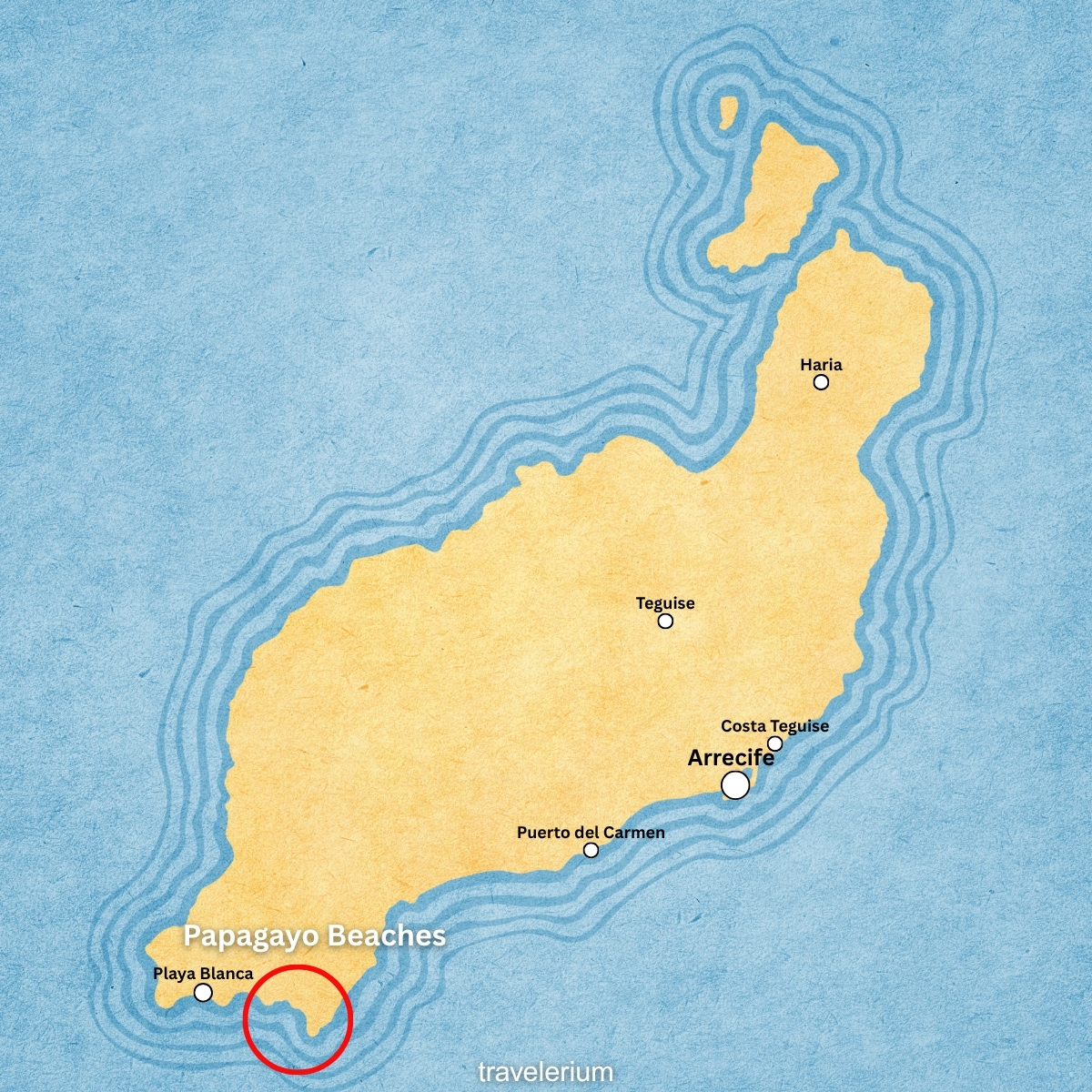
The Individual Coves — A Beach-by-Beach Breakdown
This is where most guides fall short. They mention Papagayo as though it were a single destination, give it five stars, and move on. In practice, the experience varies considerably depending on which cove you choose and what you are looking for from your day.
Playa de Papagayo
This is the flagship — the cove that has given its name to the entire stretch of coastline and the one that appears on virtually every Lanzarote postcard. A deep crescent of golden sand, backed by eroded amber cliffs, with shallow water that transitions from pale green to deep turquoise as it deepens. It is, by any honest measure, a beautiful beach.
It is also the busiest of the Papagayo coves, and that needs to be said plainly. By late morning in July or August, the sand is well covered. Boat trips arrive regularly from Playa Blanca marina, adding steady numbers throughout the day. There are two simple beach bars on site — cold drinks, basic food, reasonable prices — which is more than you will find anywhere else along this coastline. For families with young children, the shallow water, the relative facilities, and the calm conditions make this the obvious choice.
Arrive before ten in the morning if you want space to breathe. The early light also makes for the best photography — low sun, long shadows on the cliff face, and almost no one in the shot.
Playa Mujeres
Playa Mujeres is the longest and widest of the Papagayo coves, which makes it the most logical alternative when Papagayo itself is already busy. The extra width means the sand absorbs more visitors without feeling crowded, and on a mid-morning in August you will frequently find it quieter than its neighbour despite being just minutes away along the cliff track.
The trade-off is that Mujeres is slightly more exposed than the other coves. On most days this makes no difference, but on days when there is a bit more wind or a small swell running, you will notice a difference in the sea conditions compared to the more sheltered coves further along. Still perfectly swimmable for the vast majority of visitors, but worth noting if you are bringing young children or are not a confident swimmer. No facilities of any kind here — bring everything you need.
Playa de la Cera
Playa de la Cera sits between Papagayo and Mujeres in terms of geography, though it feels considerably more intimate than either. It is smaller, narrower, and less likely to appear in a travel brochure — which means it draws fewer visitors even when the main coves are at their busiest.
If what you want is a quiet morning on good sand with clear water and no real crowds, La Cera is frequently the right answer. It has nothing in the way of facilities, but its size creates a natural sense of seclusion that the larger coves cannot match. Worth the short additional walk from the main parking area.
Caleta del Congrio
Of all the Papagayo coves, Caleta del Congrio is the one that most consistently surprises people. It is tucked between La Cera and Mujeres, slightly harder to spot from the cliff path, and bypassed by the majority of visitors who are heading for one of the more obvious destinations. As a result, it often sits almost empty even on busy days.
The water here is excellent for snorkelling. The rocky edges of the cove create the kind of underwater texture — varied depth, rock and sand combined — that tends to hold marine life, and the clarity on a calm day is exceptional. If you are bringing a mask and fins, this is arguably the best of the Papagayo coves for it. No shade, no facilities, and the access path requires a little care, but the reward is a beach that feels genuinely remote despite being less than two kilometres from a busy resort.
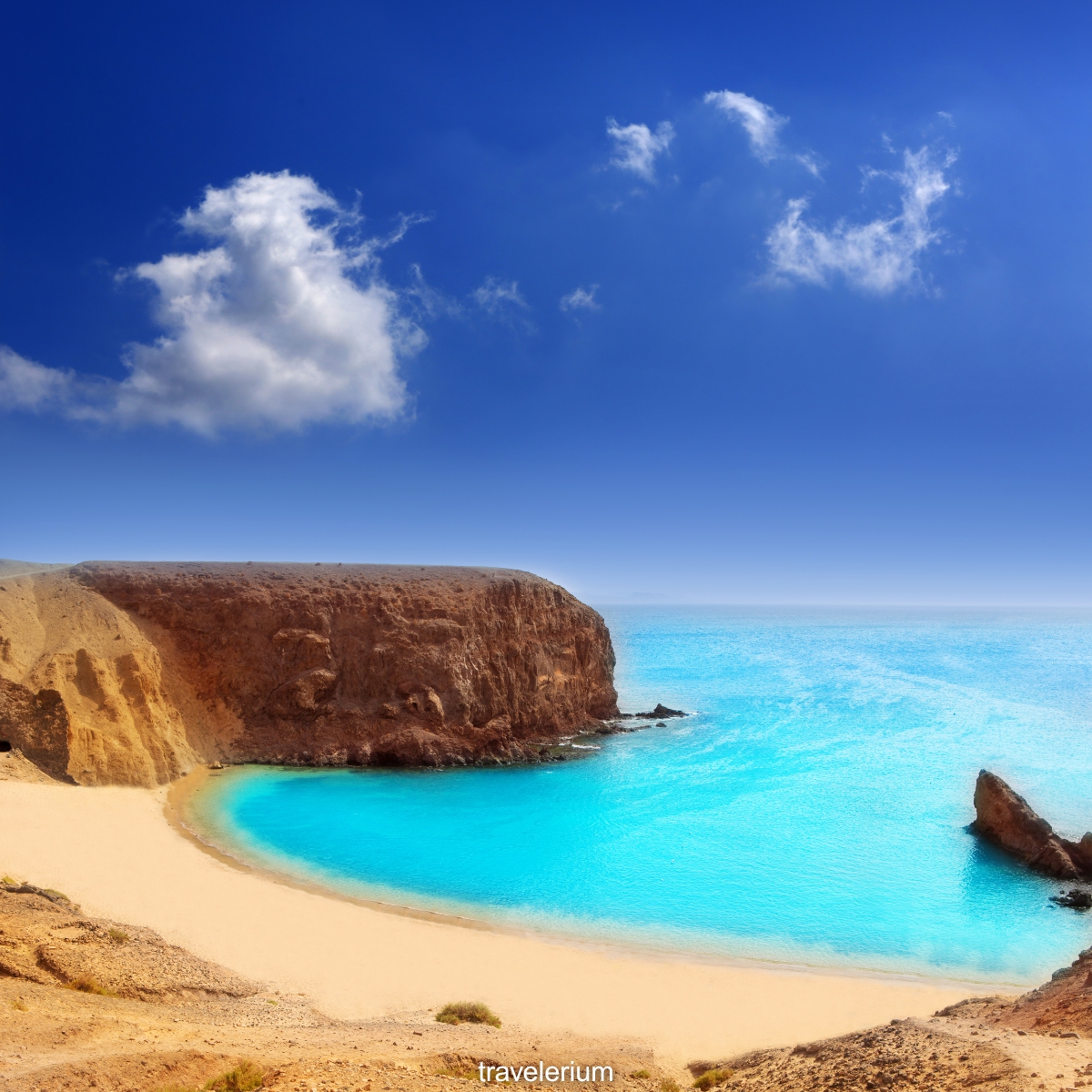
How To Get to the Papagayo Beaches
Getting to the Papagayo coves is straightforward, but each option has its own practical considerations worth understanding before you go.
By Car
The most common approach is to drive from Playa Blanca along the unpaved track that leads into Los Ajaches Natural Park. The road is well-worn and passable in a standard hire car at slow speed, but it is rutted, dusty, and not a smooth ride. Before you drive it, check your hire car agreement. Many rental companies in Lanzarote explicitly exclude unpaved roads from their insurance coverage, which means any damage to the car’s undercarriage or tyres on this track would come out of your pocket. Some companies are relaxed about this in practice; others are not. Read the small print.
A small entrance fee is charged at the barrier where the track enters the natural park — a few euros per vehicle, payable by card or cash depending on the current setup. Parking inside the park is limited, and in high season it fills quickly. Arriving after ten in the morning during July or August frequently means waiting for a space or turning back.
On Foot
Walking from Playa Blanca takes approximately thirty to forty minutes depending on your starting point and pace. The coastal path is easy to follow and offers excellent views back across to Fuerteventura, but it is exposed. There is no shade of any kind along the route, the surface underfoot is uneven volcanic rock in places, and the walk back in the midday heat of summer is genuinely draining. This option works well in spring, autumn, and on cooler mornings — less so for a midday return in August. Wear proper footwear rather than flip-flops, and carry water.
By Boat
The water taxi from Playa Blanca marina is, for many visitors, the most enjoyable and practical option. Boats run regularly throughout the morning, the crossing takes around fifteen to twenty minutes, and it drops you directly at Playa de Papagayo without any of the car hire complications or the dusty walk. Tickets are straightforward to buy at the marina. The return journey means you never have to worry about the car, the heat, or finding a parking space. The one limitation is that the boat serves primarily Playa de Papagayo itself — if you want to explore the quieter coves, you will still need to walk along the cliff path from there.
By Bike
Cycling from Playa Blanca is possible but the unpaved track section makes it uncomfortable on anything other than a mountain bike. Electric bikes have made this slightly more practical in recent years. If you are already renting a bike for the week, it is worth asking at the rental shop specifically about the Papagayo track before committing to it.
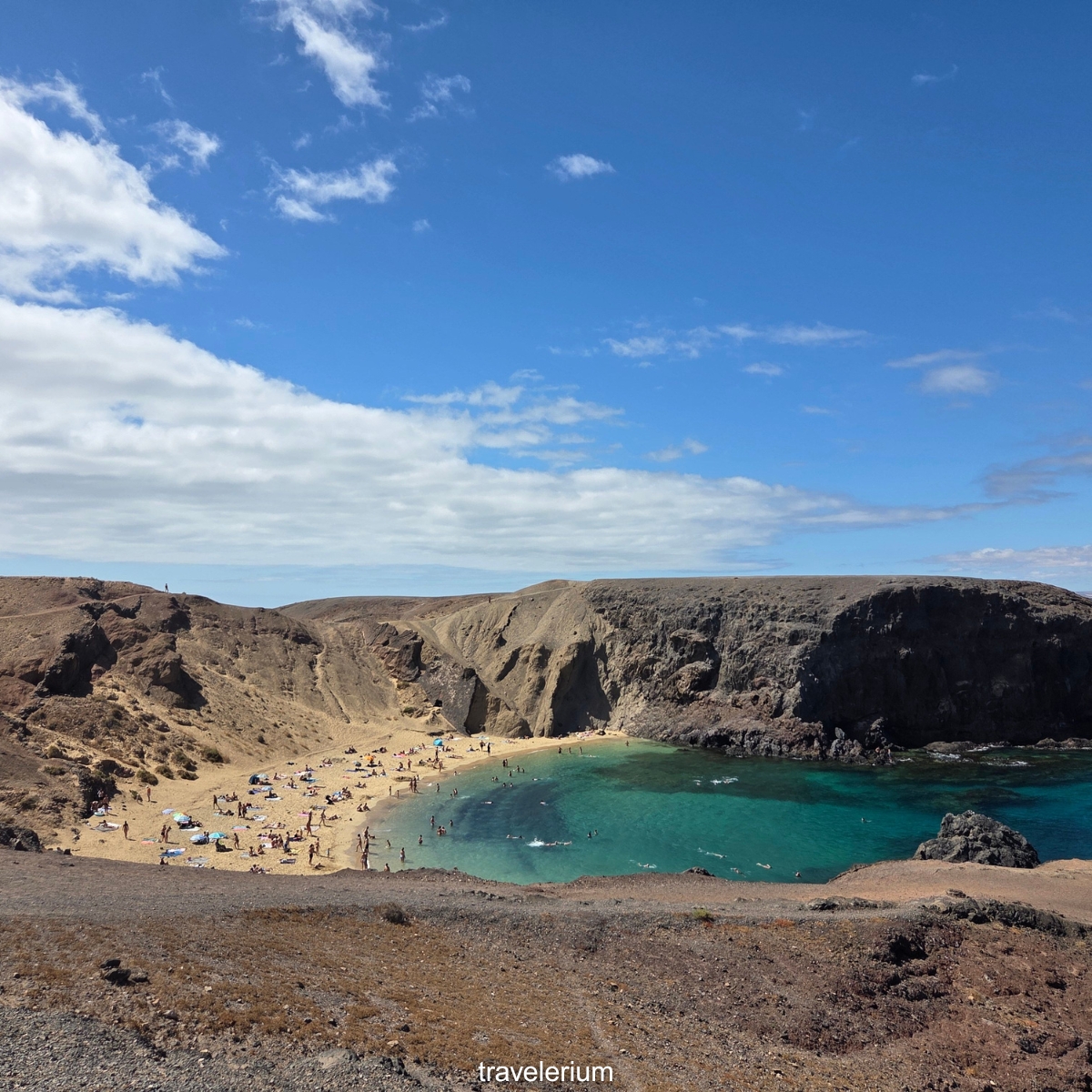
Facilities and What To Bring
It is worth being direct about this: the Papagayo beaches are beautiful precisely because they are not developed, and that means facilities across most of the coves are minimal to nonexistent.
Playa de Papagayo has two beach bars serving cold drinks, water, beer, and basic food. That is the extent of formal amenities across the entire chain. There are no showers, no changing rooms, no sunbed hire, no toilets, and no lifeguard cover anywhere within the natural park.
Pack accordingly. The essentials are:
- Drinking water — more than you think you need. The heat reflects off the sand and the cliffs, there is rarely any shade, and the beach bars on Papagayo can run out of bottled water or have queues in high season. At least two litres per person for a full day.
- High-factor sun cream. The southern Lanzarote sun is relentless, especially between eleven and three. Reapply after swimming.
- Shade of your own. A beach umbrella or a UV sun tent makes a long day on any of these coves significantly more comfortable. There are no trees, no breakwaters, no structures to shelter behind.
- Food. Unless you are happy relying on the bars at Papagayo beach — and they are not always open or well-stocked — bring your own.
- Cash. The beach bars may not reliably accept cards.
- Snorkelling gear. The water clarity across the Papagayo coves is some of the best on the island making them excellent beaches for snorkelling. A mask and fins, particularly at Caleta del Congrio, repays the effort of packing them.
- Proper footwear for the cliff paths. If you plan to walk between coves — which is easy and recommended — flip-flops are not adequate on the rockier sections.
Swimming Conditions and Safety
The Papagayo coves are among the calmest swimming waters on Lanzarote, and this is not simply a matter of luck or geography. The Los Ajaches headland acts as a natural windbreak against the northeast trade winds that dominate the island’s weather patterns, which means the water inside the coves frequently stays settled even when conditions elsewhere are difficult. On days when the beaches around Puerto del Carmen or Famara are being lashed by wind and chop, Papagayo can be mirror-flat.
Sea temperatures follow the island’s consistent pattern — around 18°C in winter, rising to approximately 23°C by late summer. Neither extreme is uncomfortable for swimming, though a winter dip will feel brisk at first. The shallow gradient at most coves, particularly Papagayo itself, makes entry easy and the water is typically clear enough to see the sandy bottom well beyond wading depth.
Playa Mujeres is slightly more exposed than the other coves and can carry a small swell on windier days. If conditions look rough or unclear, err on the side of caution — there are no lifeguards at any point along this coastline, and no immediate assistance if something goes wrong. Check how the water looks before you get in, and do not swim alone if you are uncertain about conditions.
On the more remote coves, particularly Caleta del Congrio, naturist use is common and largely accepted as the norm. This is rarely formally signposted but is well established in practice.
Best Time To Visit Papagayo
Lanzarote’s southern tip enjoys a mild climate year-round, which means there is genuinely no bad time to visit the Papagayo coves — but the experience varies considerably by season.
- Peak season — mid-June through September, plus Christmas and Easter weeks — brings the best guaranteed weather but also the heaviest crowds. Playa de Papagayo in particular can feel uncomfortably busy by late morning on a July or August day, with boat trips arriving in waves and the limited sand filling up quickly. If you are visiting during this period, the single most effective thing you can do is arrive early — before nine-thirty if possible. The difference between arriving at nine and arriving at eleven is dramatic. You will find a different beach: quieter, cooler, and with the low morning sun hitting the cliffs in a way that makes the whole cove glow.
- Shoulder season — April, May, October, and November — is the window most experienced Lanzarote visitors choose, and for good reason. Air temperatures are warm, typically between twenty-two and twenty-seven degrees, the water is comfortable for swimming, and the crowds thin out considerably even at the main Papagayo cove. You get most of the beauty with a fraction of the pressure. April and May in particular offer excellent conditions: the winter rains have passed, the vegetation in the natural park is at its greenest, and the Atlantic is calm. October is similarly reliable, with sea temperatures still carrying the warmth built up over summer.
- Winter — December through March — is a genuinely underrated time to visit if you do not mind cooler water and the occasional grey morning. Air temperatures rarely drop below eighteen or nineteen degrees even in January, which means sitting on the sand in a light layer is perfectly comfortable.
The sea at around eighteen degrees is cold but swimmable for the determined. More significantly, the coves are often almost entirely empty on weekday mornings — a completely different experience from the summer crowds, and one that many visitors who have seen Papagayo in both seasons prefer. The low winter light in the late afternoon turns the Los Ajaches cliffs a deep, warm amber that is difficult to capture in any other season.
Regardless of when you visit, mornings are consistently better than afternoons at the Papagayo beaches. The light is better for swimming and photography, the crowds are thinner, the sand is cooler underfoot, and the boat trips from Playa Blanca tend to arrive later in the morning rather than first thing. If you can only spend half a day here, spend the first half.
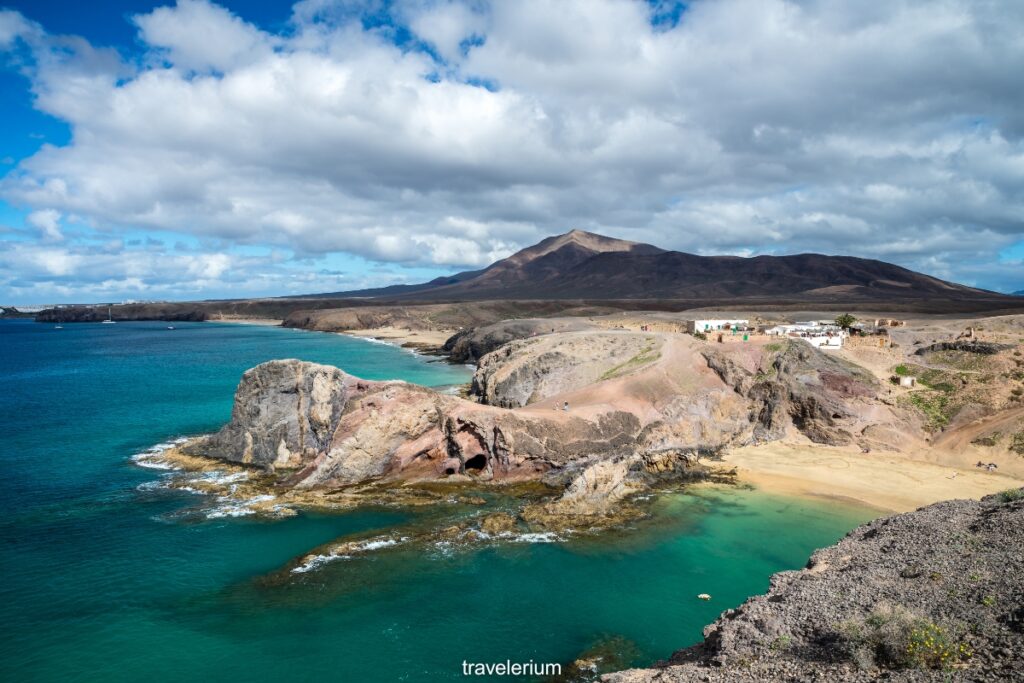
Walking Between the Coves
One of the genuine pleasures of a day at Papagayo that most visitors miss entirely is the cliff path that connects the coves. The path runs along the top of the Los Ajaches cliffs, offering views down into each cove as you walk, and the walking time between neighbouring coves is typically no more than ten to fifteen minutes. Over the course of a full day, it is entirely realistic to visit three or even four of the coves without any vehicle.
The most rewarding circuit for most visitors is to arrive at Playa de Papagayo early — taking advantage of the quiet morning and the good light — then walk the cliff path to La Cera and Caleta del Congrio as the main beach begins to fill up through mid-morning. By the time the boat trips are arriving in volume at Papagayo, you are sitting on a near-empty cove with the same quality of water and a considerably more peaceful atmosphere.
The path itself is not technically demanding, but it is uneven in places and follows the natural contours of the volcanic rock rather than any constructed surface. Closed shoes or walking sandals make the walk considerably more comfortable than flip-flops, particularly on the sections that drop down to the smaller coves. There is no shade on the cliff top, so carry water and be aware of the sun exposure if you are walking in the middle of the day during summer.
The views from the path — particularly looking back toward the Papagayo cove from the ridge above it, or forward toward Playa Mujeres with Fuerteventura visible across the water to the south — are among the better coastal panoramas on the island. It is worth pausing on the ridgeline rather than simply hurrying between beaches.
Tips for Making the Most of the Papagayo Beaches
A few practical points that make a real difference to the day:
- Arrive before ten in summer. This has been mentioned already but deserves repeating. The parking fills, the boat trips arrive, and the main cove transforms between nine and eleven in the morning during July and August. Getting there before the rush is the single most impactful thing you can do.
- Walk between coves rather than driving. Once you are inside the natural park, the cliff path between coves is far more pleasant than shuttling by car, and it gives you access to the smaller beaches that most vehicle-based visitors never reach.
- Bring snorkelling gear. The water clarity across the entire Papagayo chain is excellent, and Caleta del Congrio in particular rewards a proper look beneath the surface. Even Playa de Papagayo offers good visibility over the sandy bottom in calm conditions.
- Do not rely on the beach bars for water. They are useful and reasonably priced, but on busy days they can run short or have long queues. Your own supply of water is not optional in summer — it is a genuine necessity.
- Respect the natural park. Los Ajaches is a protected landscape and the rules are simple: take your rubbish with you, do not light fires, and do not disturb the vegetation or wildlife. The reason the coves look the way they do is precisely because this area has been shielded from development and misuse. Leave it as you found it.
- Combine your beach day with an evening in Playa Blanca. The resort is close enough to make a natural pairing — a full day on the coves followed by dinner in one of the harbour-front restaurants or a walk through Marina Rubicon. It makes for a very complete day without any complicated logistics.
- Check your hire car agreement before driving the track. It bears repeating because the cost of an uncovered claim on a rental car is not a pleasant way to end a good beach day. Either confirm your insurance covers unpaved roads or take the boat instead.
Conclusion
The Papagayo beaches reward the visitors who take them seriously. Not in any complicated way — there is nothing arduous about a day here — but in the sense that a little preparation, an early start, and the willingness to walk ten minutes beyond the main cove transforms the experience from a pleasant afternoon into something that tends to stay with people long after they have left Lanzarote.
Arrive early. Bring what you need. Walk the cliff path between coves. Spend time at Caleta del Congrio even if it means a few extra minutes of walking. Get in the water. These are not complicated instructions, but they are the difference between a postcard version of Papagayo and the real thing.
The southern tip of Lanzarote, with its protected natural park, its rust-coloured cliffs, and its chain of quiet coves looking out toward Fuerteventura, is one of those coastal places that justifies a journey on its own terms. It is not trying to impress you. It simply is what it is — and that, in the end, is more than enough.
If you are still in the early stages of planning your time on the island and weighing up where Papagayo fits against the other options — whether that is the surf beaches of the north, the long family sands of Puerto del Carmen, or the quiet remote shores of La Graciosa — the full guide to the Best Beaches In Lanzarote For Every Traveller covers every stretch of coastline worth knowing about, with the same level of practical detail to help you plan a trip that actually matches what you are looking for.
For more information about Lanzarote then our guide, ‘Lanzarote – An Ultimate Travel Guide‘ is a great place to start learning more.
Los Ajaches Natural Park entrance fee and boat taxi schedules are subject to seasonal change. Verify current prices and timetables locally before your visit.