
Lanzarote’s coastline is unlike anything else in the Canary Islands. Volcanic rock meets turquoise shallows, golden coves sit beneath rust-coloured cliffs, and wide Atlantic beaches stretch out under skies that stay clear for most of the year. With over 200 kilometres of coast, the island offers far more variety than most first-time visitors expect.
Whether you want a sheltered family bay, a raw surf beach, a snorkelling cove or a remote stretch of sand you can have almost to yourself, the best beaches in Lanzarote reward you for matching the right shore to your travel style. The trick is knowing which beaches suit swimming, which are better for photography, and which ones demand a 4×4 or a decent pair of walking shoes to reach.
This guide covers every type of Lanzarote beach worth your time. You will find the famous Papagayo beaches and the dramatic cliffs of Famara alongside quieter spots in the north and the pristine sands of La Graciosa. Each section includes the practical detail you actually need: access, facilities, wind exposure, swimming safety and crowd levels. If you are planning a broader Lanzarote holiday and want help with accommodation, excursions and things to do in Lanzarote beyond the coast, the Ultimate Travel Guide to Lanzarote is the best place to start.
Check Prices & Availability for Hotels in Lanzarote
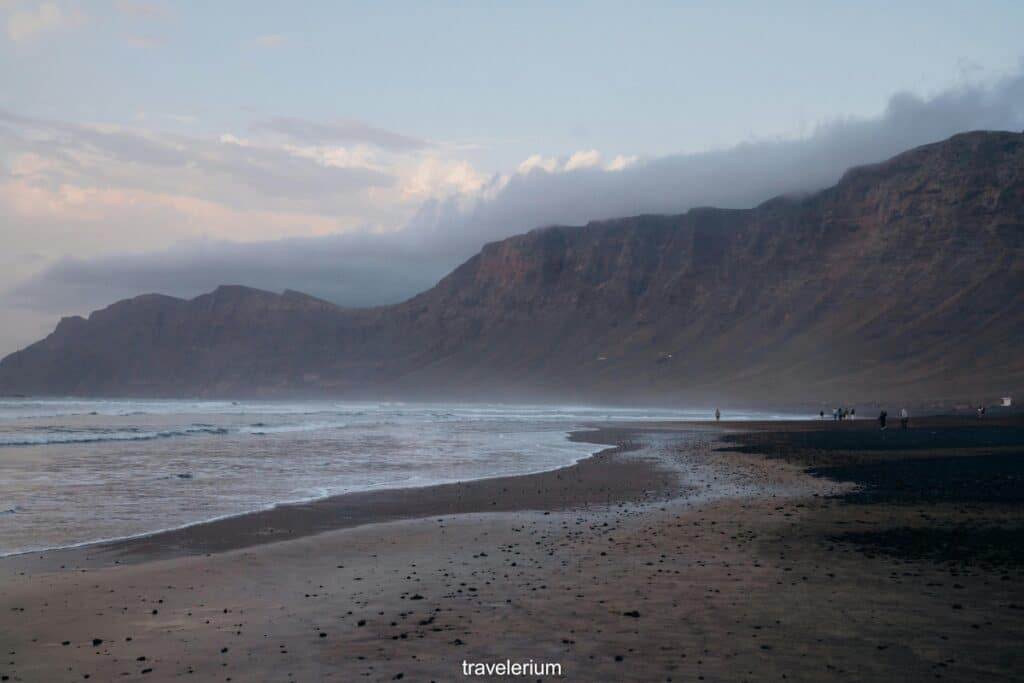
Table of Contents
What Lanzarote’s Coastline Is Really Like
Lanzarote’s shores are shaped by volcanic geology and Atlantic weather patterns, which means conditions change dramatically from one side of the island to the other. Understanding sand colour, sea state and seasonal wind will help you pick the right beaches in Lanzarote before you arrive.
Sand Colours, Natural Pools And Volcanic Scenery
If you have only seen photos of golden Papagayo coves, the variety across the island will surprise you. The most beautiful beaches in Lanzarote come in at least three distinct palettes.
Golden to white sand dominates the south and the sheltered bays around Playa Blanca. Caletón Blanco in the north offers brilliant white sand fringed by black lava, creating one of the most photographed contrasts on the island.
Black volcanic sand appears along the western and southern coasts. Playa Quemada and Montaña Bermeja are the best-known examples, and the dark grains can get extremely hot underfoot in summer.
Mixed and rocky shores are common in the north and west, where old lava flows have created natural rock pools. These tidal pools are often calm enough for a gentle dip even when the open ocean is rough.
A map of Lanzarote makes the split clear: the south and east coasts are generally more sheltered, while the north and west face the full force of the Atlantic. Naturist beaches in Lanzarote are scattered across wilder stretches, particularly within the Papagayo area and parts of Famara. They are rarely signposted but widely accepted on the more remote shores.
Sea Conditions, Wind And Swimming Safety
Lanzarote sits in the path of the northeast trade winds, and this shapes every beach day you will have.
Southern and south-eastern beaches tend to be the calmest. Sheltered coves around Papagayo and resort beaches like Playa Flamingo and Playa Dorada benefit from natural protection. Breakwaters at several resort beaches keep waves small, making them reliable for children.
Northern and western shores receive more swell and stronger winds. Famara is exposed to open Atlantic rollers, which is exactly why surfers love it and exactly why casual swimming there is not advisable. Rip currents can be powerful, and red flags appear regularly.
Wind is a constant companion. Even on a still day in Playa Blanca, you may find a stiff breeze blowing across Famara. Mornings are usually calmer, so plan your beach time early if you are heading to exposed spots. A lightweight windbreak is one of the most useful things you can pack.
Best Time To Visit And What Facilities To Expect
You can use Lanzarote’s beaches year-round. Sea temperatures range from around 18°C in winter to 23°C in summer, and air temperatures rarely dip below 20°C even in January.
Peak season runs from mid-June through September and again over Christmas and Easter. The main resort beaches and Papagayo get busy from late morning onwards during these periods. Arrive before 10am for the best spot.
Shoulder months (April, May, October, November) offer warm weather, quieter sands and lower hotel prices. Water is comfortable for swimming without a wetsuit from May to November for most people.
Facilities vary hugely. Resort beaches in Puerto del Carmen, Playa Blanca and Costa Teguise have lifeguards in season, showers, toilets, sunbed hire and nearby restaurants. Wilder beaches like Caletón Blanco, Famara and the northern coves have little or no infrastructure. Bring water, sun protection and your own shade for any beach outside the main resorts.
Best Beaches in Lanzarote You Should Prioritise First
Six beaches stand apart from the rest for scenery, character or sheer quality of experience. These are the ones worth building a day around, whether you are based in a resort or exploring by hire car.
Playa de Papagayo And The Papagayo Beaches
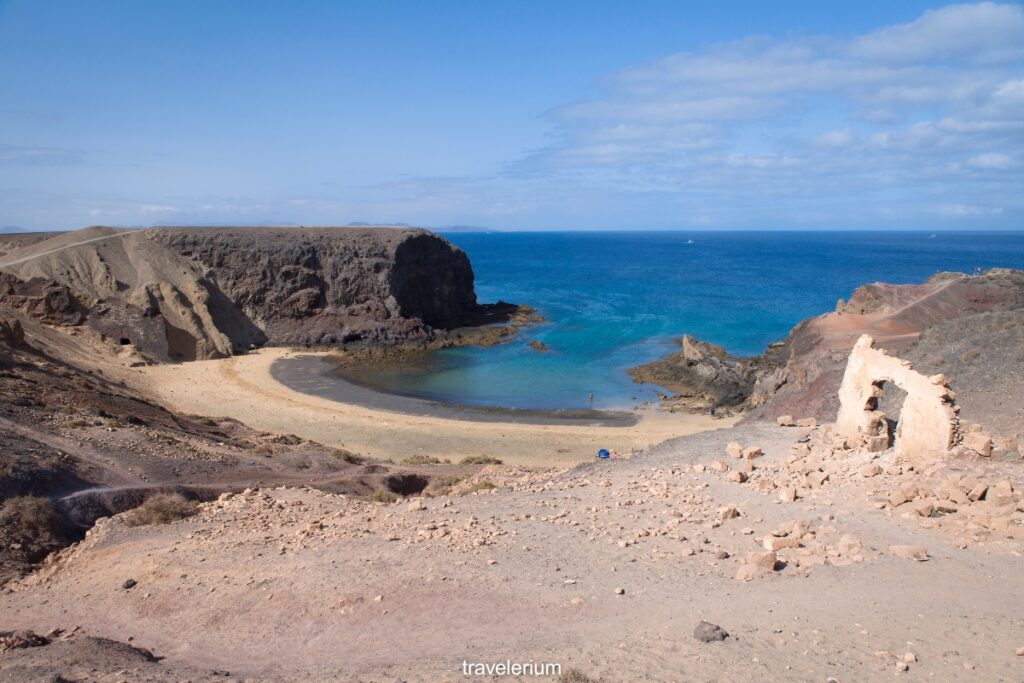
Playa de Papagayo is the beach most visitors picture when they think of Lanzarote, and it earns that reputation. Tucked inside the Los Ajaches Natural Park at the island’s southern tip, it is a crescent of golden sand backed by low, eroded cliffs and lapped by shallow emerald water.
The wider Papagayo beaches are actually a chain of coves: Playa de Mujeres, Playa de la Cera, Caleta del Congrio and Papagayo itself. Each has a slightly different character. Playa Mujeres is the longest and widest, with more room to spread out. Playa de la Cera is smaller and quieter. Caleta del Congrio sits between them and rarely draws crowds.
Getting there: You can drive from Playa Blanca along an unpaved track (a small toll applies) or walk from the eastern edge of town in around 30 to 40 minutes. Be aware that many car hire agreements do not cover dirt roads, so check your terms. The walk is hot but scenic.
The cliffs provide shelter from the trade winds, which is why the water stays calm even when other beaches are choppy. There are two simple beach bars at Papagayo itself, but no other facilities across the Playas de Papagayo. Bring plenty of water and sun cream.
These beaches get busy from midday in summer. If you can arrive early or visit in shoulder season, the difference is dramatic. The Los Ajaches landscape has a desert-like beauty that photographs well in low morning light.
Playa de Famara For Space, Scenery And Surf Culture
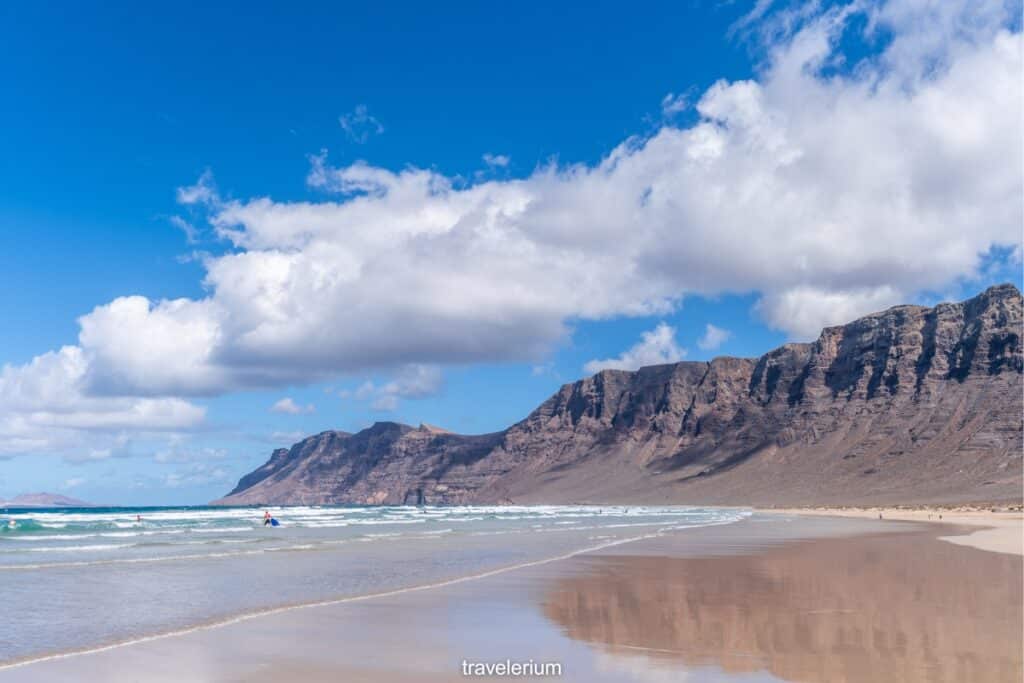
Famara Beach sits on the northwest coast, a vast sweep of sand that runs for nearly six kilometres beneath the towering Risco de Famara cliffs. It is one of the most visually dramatic beaches in the Canary Islands and a completely different experience from the sheltered southern coves.
The setting is genuinely spectacular. The Famara cliffs rise over 400 metres, changing colour as the sun moves across them. At sunset, the wet sand reflects the sky and the cliffs glow amber. Photographers and surfers share the beach in roughly equal numbers.
This is the heart of surfing in Lanzarote. The village of Caleta de Famara has several surf schools, board hire shops and laid-back tapas restaurants. Conditions suit beginners on smaller days and experienced surfers when the swell picks up.
A clear warning: Famara is not a safe swimming beach. Currents are strong, waves break unpredictably, and there is no lifeguard cover along most of the stretch. Enjoy the scenery, take a lesson, or paddle at the very edge, but do not swim out.
There are no facilities on the beach itself. Parking is easy along the dunes, and the village has everything you need for a meal or a coffee before or after your visit.
Playa Flamingo For Easy Family-Friendly Swimming
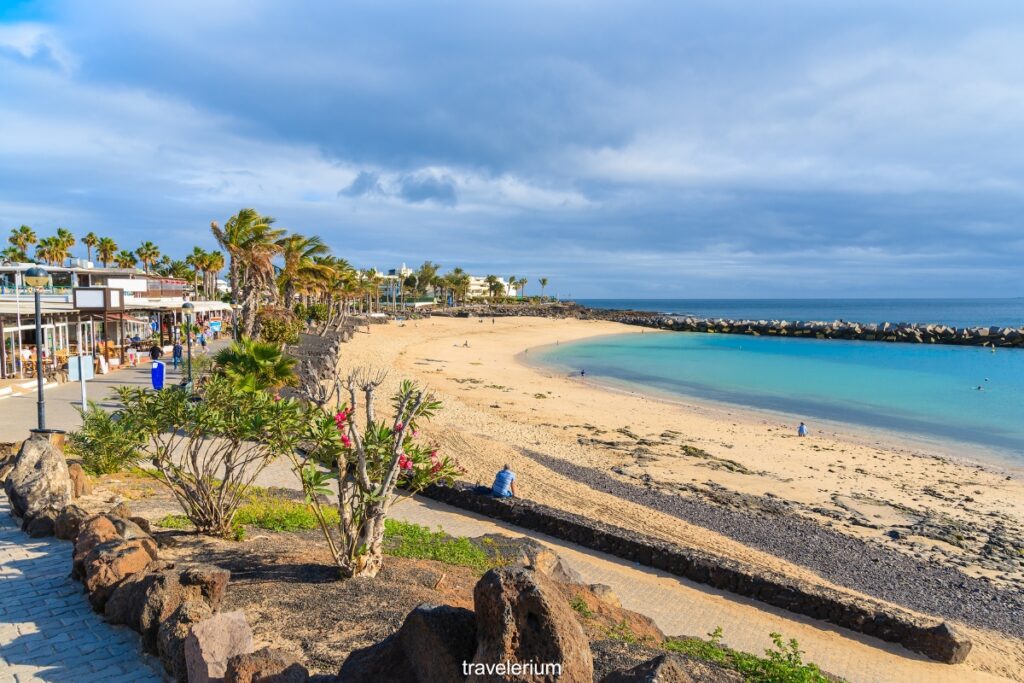
If you want a beach that combines good looks with genuine convenience, Playa Flamingo in Playa Blanca is hard to beat. It sits just west of the town centre, backed by hotels and restaurants, with Montaña Roja volcano framing the view to the south.
Two stone breakwaters keep the water calm and shallow, which makes this one of the safest swimming beaches on the island for young children. The sand is fine and golden, and the beach is long enough that it rarely feels overcrowded even in peak season.
Lifeguards are on duty in season. Showers, toilets and an accessibility chair are all available. Restaurants line the promenade behind the sand.
Playa Flamingo faces south-west, so it catches the afternoon and evening sun. Combined with the sheltered water and nearby Marina Rubicon for dining, it is a strong option if your priorities are easy access and relaxed swimming rather than rugged scenery.
Playa Chica For Snorkelling In Puerto del Carmen
Playa Chica is a tiny cove on the western edge of Puerto del Carmen, barely 60 metres across, but it punches well above its size for underwater interest.
A natural rock barrier creates a calm, enclosed pool with remarkably clear water. Visibility is often excellent, and you can see a variety of fish without venturing far from shore. It is widely considered the best snorkelling spot you can reach on foot from a major resort. Diving schools use the site regularly, too.
The beach has fine golden sand, lifeguard cover in season, and a shower block. A small car park sits nearby, and several snack bars are within a minute’s walk along the seafront promenade.
Because it is small, Playa Chica can fill up on busy afternoons. Mornings tend to be quieter and offer the best underwater visibility.
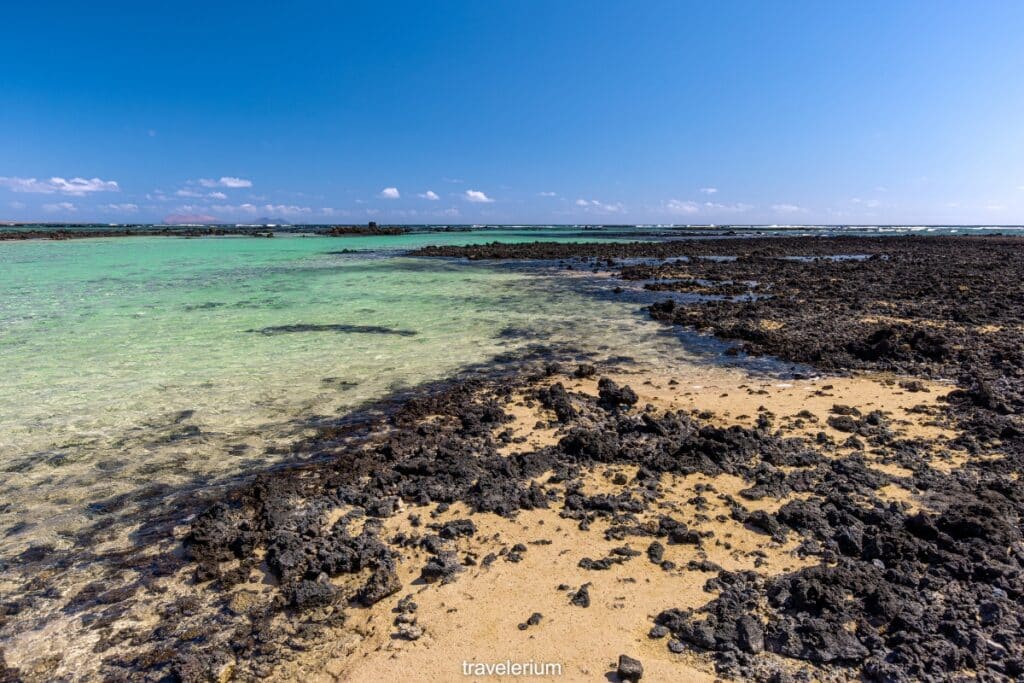
Caletón Blanco For White Sand And Lava Pools
Heading north towards Órzola, Caletón Blanco is one of the most striking sights on the island. Bright white sand sits in shallow lagoons surrounded by jet-black lava rock, creating a contrast that looks almost unreal.
The water in the lagoons is very shallow and calm, warmed by the sun, making it a safe and gentle paddling spot. It is not a place for serious swimming, but for families with toddlers or anyone who wants to float in warm, sheltered water and soak up an unusual landscape, it is perfect.
There are no facilities at all. A car park sits beside the road, and you will need to carry everything you want for the day. The beach rarely gets crowded, even in summer, because most visitors stick to the southern resorts.
Playa del Reducto For A Convenient Arrecife Beach Day
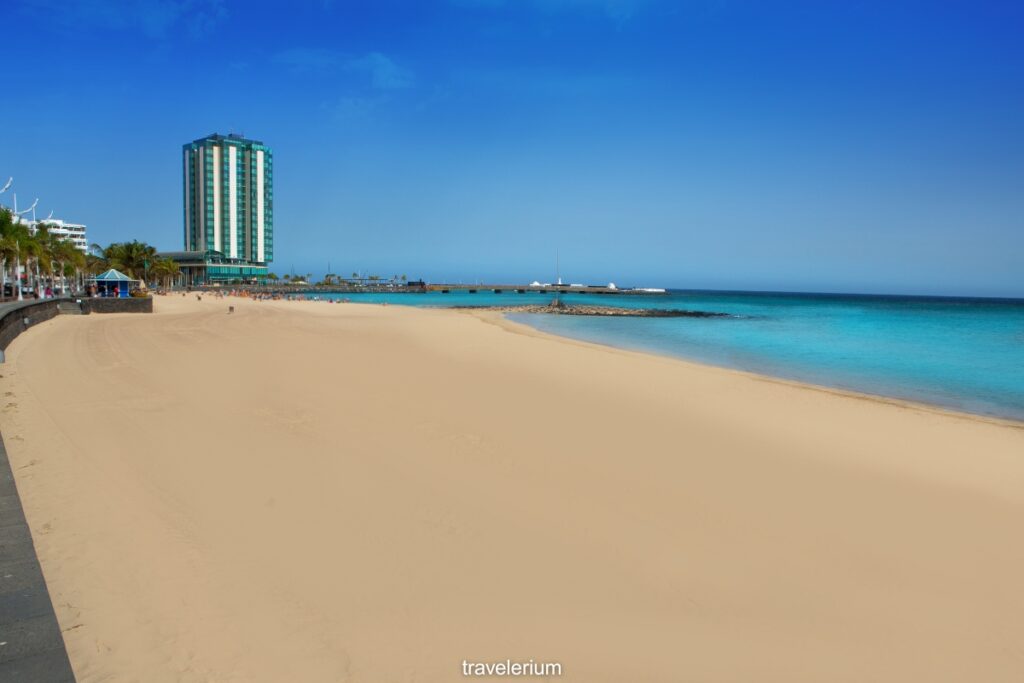
The island’s capital, Arrecife, is often overlooked by tourists, but Playa del Reducto is a genuinely pleasant urban beach right in the centre of town.
A long curve of golden sand faces a calm, shallow lagoon protected by a reef. The water is clean and safe for swimming. Behind the beach, a promenade leads to cafés, shops and the town’s waterfront.
If you have a morning free before a flight, or want a change of scene from the resort beaches, Playa del Reducto is easy to reach and well maintained. Lifeguards, showers and sunbed hire are all available. It is the kind of beach that locals use regularly, which tends to be a good sign.
Resort Beaches That Make A Great Easy Base
The three main resort towns each have reliable, well-serviced beaches within walking distance of hotels, restaurants and supermarkets. These are the beaches you will use most often if convenience matters to you.
Playa Grande And Other Easy Options In Puerto del Carmen
Playa Grande is the main beach in Puerto del Carmen and one of the busiest beaches in Lanzarote. It stretches for over a kilometre of golden sand, with sunbed hire, lifeguards, showers and a long row of restaurants and bars running behind it.
The water is generally calm, although some swell can reach the shore on windier days. It faces south-east, so you get morning and midday sun before the promenade buildings cast shade in the late afternoon.
Further east, Playa de los Pocillos is wider and quieter, with more space between sunbeds. It is backed by low-rise hotels and is a solid alternative if you find Playa Grande too busy.
Puerto del Carmen is the island’s largest resort, so you have the widest choice of dining, nightlife and shops within easy reach of the sand.
Playa Dorada And Nearby Choices In Playa Blanca
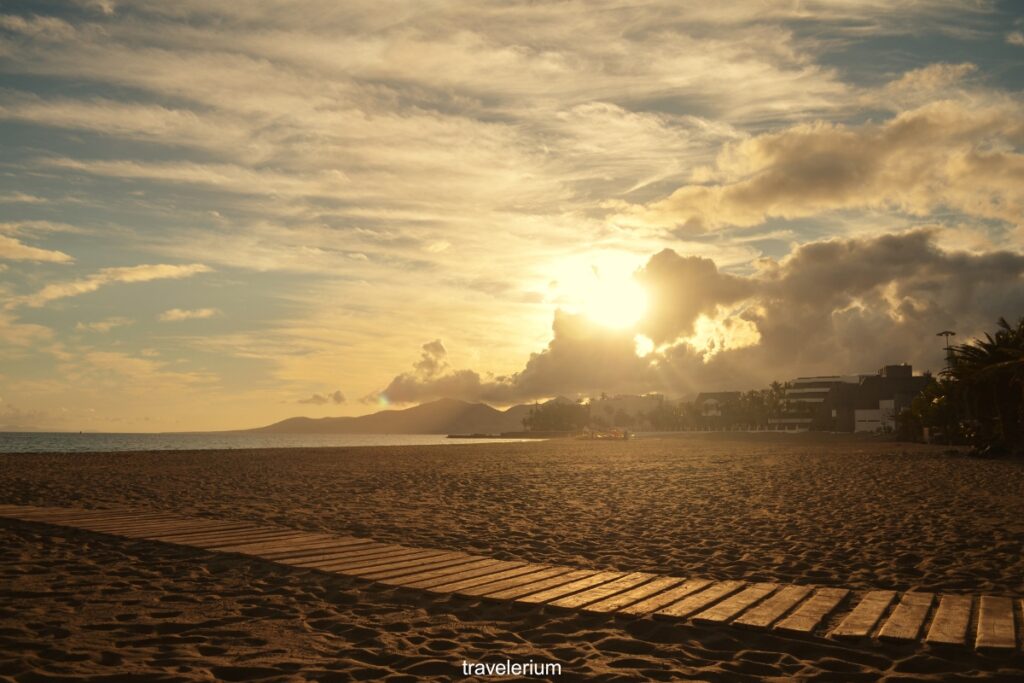
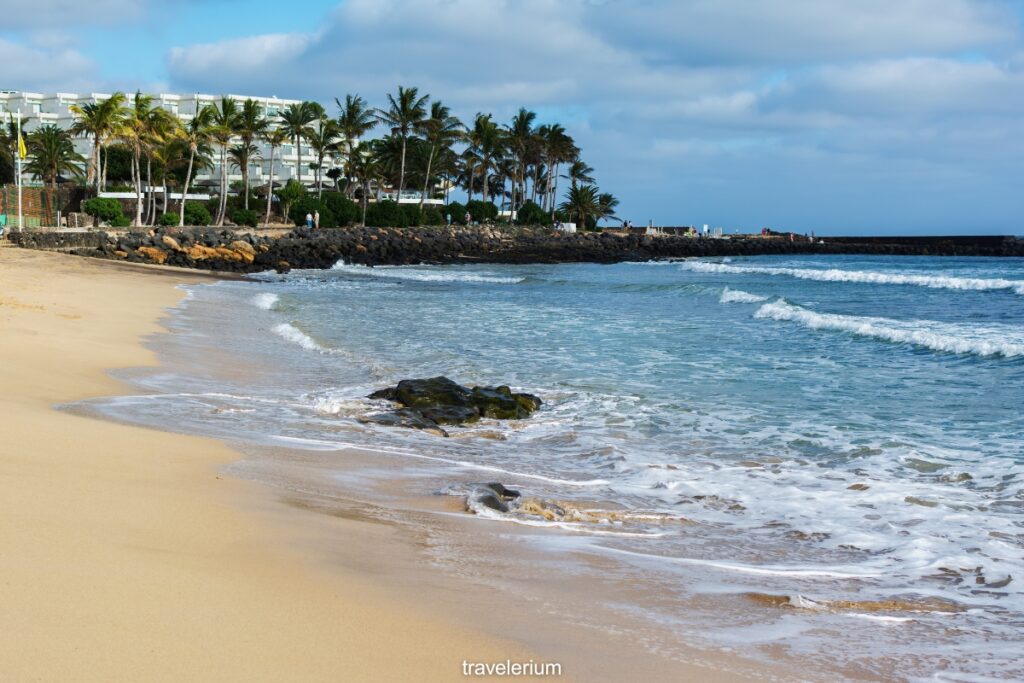
Playa Dorada sits right in the heart of Playa Blanca, next to some of the town’s most popular hotels. It is a well-maintained stretch of imported golden sand with calm, shallow water, lifeguards and full facilities.
The beach faces south and is gently sheltered, making it a safe and comfortable option for families. Restaurants, ice cream shops and the Marina Rubicon are all a short walk away.
If you are staying in Playa Blanca, you also have quick access to Playa Flamingo to the west and the Papagayo beaches to the east, giving you several very different coastal experiences within a small radius. Hotels in Playa Blanca tend to suit visitors who want a quieter base than Puerto del Carmen but still want resort-level convenience.
Las Cucharas And El Jablillo In Costa Teguise
Costa Teguise’s best beaches offer a different feel from those of the other two resort towns. They are quieter, more spread out, and popular with windsurfers.
Playa de las Cucharas is the main beach, a wide bay with golden sand and reliable trade winds that make it one of the best spots for windsurfing and kitesurfing on the island. The water is generally shallow near the shore, so it works for families too, though the breeze can be persistent. Sunbed hire, lifeguards and beachfront restaurants are all in place.
Playa del Jablillo is a smaller, more sheltered cove at the northern end of the resort. Natural rock formations create a semi-enclosed bathing area with calmer water, making it a better choice for young children or anyone who prefers to swim without waves.
Hotels in Costa Teguise tend to offer good value. The resort is well placed for day trips to the north of the island, including Jameos del Agua and the Cueva de los Verdes.
Wild Northern And Western Shores Worth The Detour
Move away from the resorts and Lanzarote reveals a rawer, more atmospheric coastline. These beaches trade convenience for solitude, unusual geology and genuinely memorable scenery.
El Golfo And Playa del Charco de los Clicos
El Golfo is not a beach you visit for swimming. It is a beach you visit because there is nothing else quite like it. A half-collapsed volcanic crater meets the Atlantic, and inside it a vivid green lagoon, the Charco de los Clicos, has formed where sulphur and algae combine.
The backdrop is extraordinary: black sand, layers of red and ochre rock, and the green water below. A viewing platform above the lagoon gives you the best angle. Sunset is the ideal time, when the colours intensify.
Montaña Bermeja, nearby, has a short beach of black volcanic sand that is worth a quick stop for the colour alone. The village of El Golfo has several excellent seafood restaurants, making this a natural half-day trip from any resort.
Playa de la Garita And Punta Mujeres
On the northeast coast, Playa de la Garita is a local favourite that most tourists never reach. It sits near the town of Arrieta and has golden sand, calm water and a relaxed atmosphere. Facilities include showers and a couple of beachside cafés.
A short drive north, the tiny fishing village of Punta Mujeres has a series of natural rock pools right along the waterfront. These are sheltered, calm and surprisingly warm, perfect for a gentle swim and a contrast to the wilder ocean nearby. The village is quiet, authentic and a good lunch stop.
Playa Quemada And Quiet Coastal Alternatives
Playa Quemada is a small, dark-sand beach on the south-east coast, reached via a narrow road from the main highway. A handful of whitewashed houses, a simple restaurant and very few other visitors make this feel like a different island entirely.
The beach is pebbly in places and not ideal for long sunbathing sessions, but the setting is peaceful and the snorkelling along the rocks can be rewarding on calm days. It appeals most to visitors who want an hour or two away from any trace of resort life.
Playa del Risco For A Remote Adventure
If you enjoy a challenge, Playa del Risco sits at the base of the Famara cliffs on the northwest coast. Reaching it requires a steep, rocky descent that takes around 30 to 45 minutes each way. The path is uneven and exposed, so sturdy footwear and water are essential.
The reward is a long, wild beach with views across the strait to La Graciosa. You will likely have much of it to yourself. Swimming is possible on calm days, but the currents here can be unpredictable, so exercise caution.
This is not a beach for everyone, but if you want a genuine sense of remoteness within easy reach of civilisation, it delivers.
La Graciosa Beaches For A Memorable Day Trip
The tiny island of La Graciosa, part of the Chinijo Archipelago just north of Lanzarote, has some of the most pristine beaches and quietest beaches in the entire Canary Islands. With no paved roads and fewer than 800 residents, it feels wonderfully removed from the mainland resorts.
Playa Francesa For Calm Water And Soft Sand
Playa de la Francesa is the beach most day-trippers head for first, and for good reason. It sits on the southern shore of La Graciosa, facing the dramatic wall of the Risco de Famara cliffs across the strait.
The water is shallow, clear and sheltered from the prevailing winds, making it excellent for swimming and snorkelling. The sand is fine and pale, and the beach is long enough that you can usually find a quiet section even on busy days.
There are no facilities at all. Bring everything you need, including shade if you burn easily, as there is no natural cover.
Playa de las Conchas For Raw Atlantic Beauty
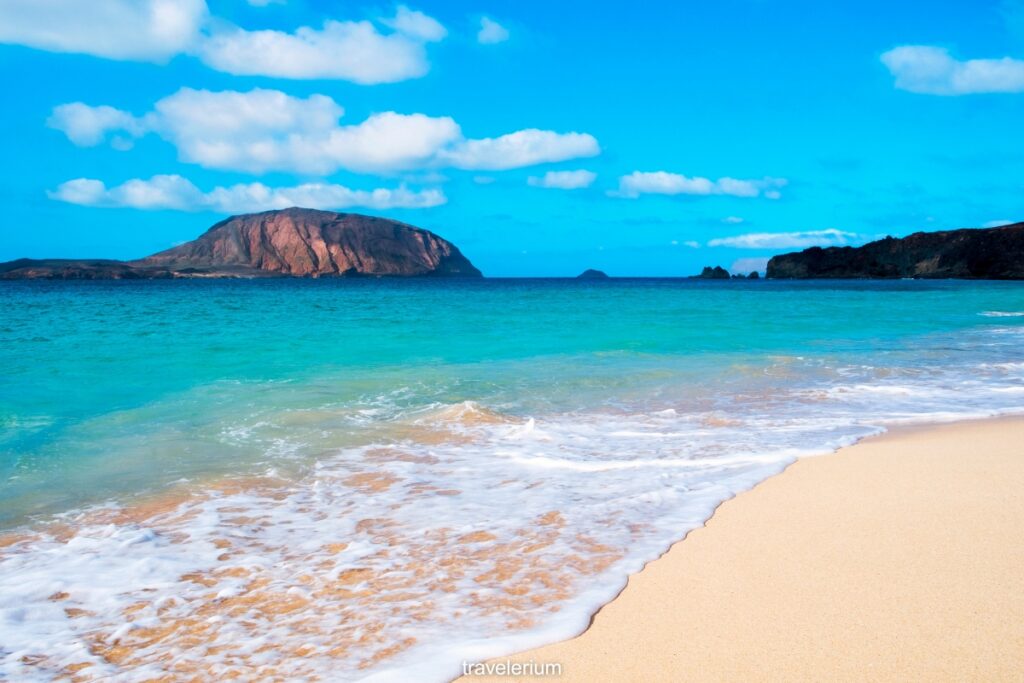
At the northern tip of the island, Playa de las Conchas is the most spectacular beach on La Graciosa. A wide arc of golden sand faces the open Atlantic, with the volcanic cone of Montaña Clara rising offshore.
The scenery is stunning, but the swimming is not straightforward. Strong currents and powerful waves make the water dangerous for bathing most of the time. Treat this as a beach for walking, sunbathing and photography rather than a place to swim.
The walk from Caleta de Sebo takes around 50 to 60 minutes each way across sandy tracks. You can also hire a bicycle or book a water taxi for part of the journey.
How To Reach The Beaches From Caleta de Sebo
The only settlement on La Graciosa is Caleta de Sebo, where the ferry from Órzola on Lanzarote docks. Ferries run roughly every 30 to 45 minutes during the day, and the crossing takes about 25 minutes.
From Caleta de Sebo, your options for reaching the beaches are:
- On foot along sandy tracks (no paved roads exist on the island)
- By bicycle, hired from one of several rental shops in the village
- By water taxi to Playa Francesa, which saves time and energy
Before heading to La Graciosa, it is worth stopping at the Mirador del Río viewpoint on the Lanzarote mainland for a bird’s-eye view of the island you are about to visit. Allow a full day for the trip if you want to see both main beaches.
Choosing The Right Beach For Your Trip
With so many beaches in Lanzarote, narrowing down your shortlist depends on what you actually want from your time on the coast. Here is a quick breakdown by travel style.
Best Picks For Families With Young Children
Calm, shallow water and nearby facilities matter most when you have small children in tow. Your strongest options for best beaches for families are:
- Playa Flamingo (Playa Blanca) for breakwater-protected water and full facilities
- Playa Dorada (Playa Blanca) for a safe, central beach with restaurants close by
- Playa del Jablillo (Costa Teguise) for a naturally sheltered rock pool setting
- Caletón Blanco for warm, ankle-deep lagoons (bring your own supplies)
Avoid Famara, Playa de las Conchas and exposed northern beaches with young swimmers.
Where To Go For Snorkelling, Diving And Kayaking
These are some of the best snorkelling beaches on Lanzarote:
- Playa Chica (Puerto del Carmen) is the top walk-in snorkelling spot, with clear water and abundant marine life
- Papagayo beaches offer good visibility and calm conditions on settled days
- Playa Francesa (La Graciosa) has excellent snorkelling over sandy seabeds with clear water
Dive centres operate from Puerto del Carmen and Playa Blanca, offering guided reef and wreck dives.
Top Spots For Surfing And Windsports
- Playa de Famara is the island’s premier surf beach, with schools, hire shops and consistent Atlantic swell
- Playa de las Cucharas (Costa Teguise) is the go-to spot for windsurfing and kitesurfing thanks to steady trade winds
- Playa Honda, between the airport and Arrecife, is a local windsurf spot with fewer tourists
If you are new to surfing in Lanzarote, Famara’s schools cater to beginners with shallow, sandy-bottom breaks.
Useful Beach Tips Before You Set Off
- Wind protection: A lightweight windbreak makes a real difference, especially on exposed beaches. Mornings are usually calmer.
- Sun cream and shade: UV is strong year-round. Wild beaches have no shade at all, so bring an umbrella or a pop-up shelter.
- Footwear: Black sand and volcanic rock get very hot in summer. Water shoes are useful at rocky beaches like Playa Quemada.
- Water and supplies: Always carry drinking water to beaches outside the resorts. There are no shops or vendors at most wild beaches.
- Parking: Resort beach parking fills quickly in high season. Arrive before 10am or be prepared to walk.
- Hire car terms: Check whether your rental agreement covers unpaved roads before driving to Papagayo or other off-road beaches.
For a full breakdown of accommodation, transport and the best things to do in Lanzarote beyond the beach, the Ultimate Travel Guide to Lanzarote covers everything you need to plan your trip.
FAQ
What is the best beach in Lanzarote?
Playa de Papagayo is widely considered one of the best beaches in Lanzarote thanks to its golden sand, clear water and sheltered setting. However, the right choice depends on what you want: Famara is best for surfing and dramatic scenery, Playa Flamingo suits families, and Playa Chica is excellent for snorkelling.
Which beaches in Lanzarote are best for families?
Playa Flamingo and Playa Dorada in Playa Blanca are among the best family beaches because their breakwaters create calm, shallow swimming areas. Playa del Jablillo in Costa Teguise is another sheltered option, while Caletón Blanco’s shallow lagoons are particularly suitable for paddling with toddlers.
Where is the clearest water in Lanzarote?
The sheltered coves around Papagayo often have exceptionally clear water. Playa Chica in Puerto del Carmen is also known for excellent visibility, making it one of the island’s most accessible places for snorkelling. Playa Francesa on La Graciosa offers clear, shallow water when conditions are calm.
What is the best beach in Lanzarote for snorkelling?
Playa Chica is generally the best option for easy shore-based snorkelling. Its protected cove has calm, clear water and abundant marine life close to the beach. Other possibilities include Playa Francesa, Playa del Jablillo and the rocky shoreline around Playa Quemada on calm days.
Is Famara Beach safe for swimming?
Famara is not recommended for casual swimming. The beach is exposed to Atlantic waves, strong currents and potentially dangerous rip tides. It is better suited to surfing, walking and photography. Visitors should obey warning flags and avoid entering the water beyond the shallows.
How do you reach the Papagayo beaches?
You can drive to the Papagayo beaches from Playa Blanca using an unpaved track, for which a small access fee may apply. Check whether your hire-car agreement permits driving on unsurfaced roads. Alternatively, you can walk from the eastern side of Playa Blanca in approximately 30–40 minutes.
Are there white-sand beaches in Lanzarote?
Yes. Caletón Blanco is especially striking, with bright white sand surrounded by black volcanic rock. Lanzarote also has numerous pale-golden beaches, including Papagayo, Playa Flamingo and Playa Dorada. For soft, light-coloured sand in a more remote setting, consider Playa Francesa on La Graciosa.
Does Lanzarote have black-sand beaches?
Lanzarote has several volcanic beaches with black or very dark sand. El Golfo, Montaña Bermeja and Playa Quemada are notable examples. These beaches are valued mainly for their unusual landscapes, although conditions are not always suitable for swimming.
When is the best time to visit Lanzarote’s beaches?
Lanzarote’s beaches can be visited throughout the year. April, May, October and November are particularly appealing because conditions are usually warm and beaches are quieter than during summer, Easter and Christmas. On exposed beaches, mornings generally have lighter winds, while arriving before 10am helps you avoid crowds at popular locations such as Papagayo.